
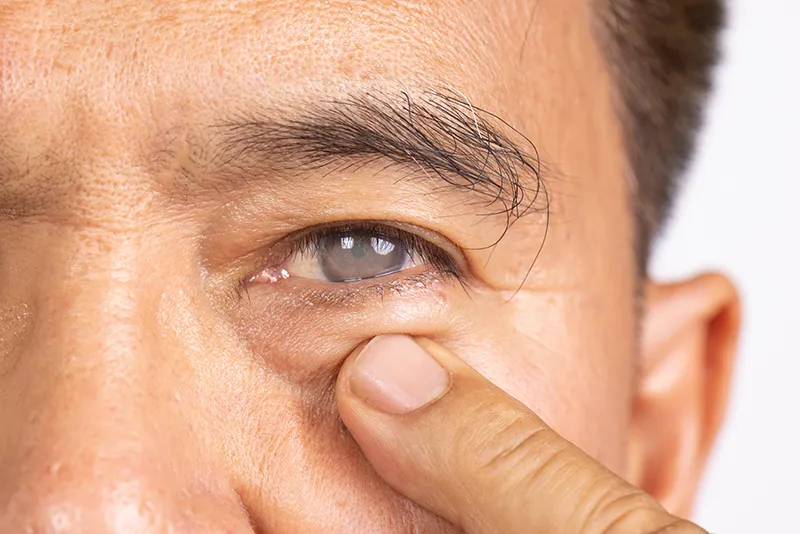
If your glasses don’t seem to be working the way they used to, you might think you just need a new prescription. But sometimes, subtle changes in your vision aren’t about your lenses—they’re happening inside the eye. Cataracts tend to develop gradually, often going unnoticed until everyday tasks like night driving or reading are more difficult.
Cataracts are incredibly common, especially with age, and spotting the early signs can help you keep doing the things you enjoy with more comfort and confidence.
What do cataracts feel like?
As cataracts progress, you might notice:
- Blurry or hazy vision that doesn’t clear
- Glare and halos around lights
- Colors looking faded or less bright
- Needing brighter light to read or do close work
- Frequent prescription changes with only small improvements
- Double vision in one eye or ghosting of images
- Reduced contrast
Driving at night with cataracts
You may first notice cataracts when driving at night. Headlights may seem brighter, road signs harder to read at a distance, and wet roads can create more visual strain than before. For some, it can even make night driving feel exhausting.
What causes cataracts?
- Aging (the most common factor)
- UV exposure without adequate eye protection
- Smoking
- Diabetes and blood sugar changes
- Steroid medications (especially long-term use)
- Past eye injury or surgery
- Family history
None of this means you did something “wrong.” It just means your eyes may need a different kind of support now than they did ten years ago.
What an eye exam can tell you about cataracts
A comprehensive eye exam gives us a chance to take a close look at what’s going on with your vision and whether cataracts are causing your symptoms. From there, we’ll walk you through what we’re seeing and put together a clear, personalized plan for treatment.
We also encourage you to come with questions. Common ones include:
- “Is it still safe for me to drive at night?”
- “Would new glasses improve my vision?”
- “How quickly are these changes likely to progress?
Clearer vision starts with a plan you can feel good about
If you’ve been squinting more, avoiding night driving, or feeling like your glasses aren’t keeping up, we’d be glad to help. Schedule an appointment at our eye care centers in Arlington and Memphis, and we’ll take the time to evaluate your symptoms, talk through your options, and figure out the next best step together.